by Jennifer Prill, owner of SideKick Dog Training
[NOTE: This post originally appeared on www.sidekick-dogtraining.com]
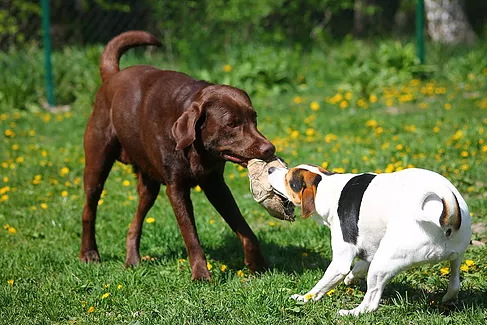
Dog parks! In a perfect world, they’re such awesome places to take our SideKicks: You can get some great off-leash training practice in; dogs are able to run free and really stretch their legs inside secure fencing (and, sometimes, parks even have agility equipment for your dog to climb around on); and the dog park provides the opportunity to meet new people and other dogs!
But, there are a few operative words at work there: “In a perfect world.” Unfortunately, we do not live in a perfect world and a wonderful trip to the dog park can turn south very quickly.
 Going to the dog park involves so many variables – more than we could ever hope to control or account for – and a lot of the concerning variables revolve around untrained, unruly, off-leash dogs and inattentive or inexperienced dog parents. The dynamics of dog play and dog interactions are sensitive and it only takes the introduction of one new dog to completely throw those dynamics into chaos.
“But, it’s such a great place to socialize your dog!”
Well…yes and no.
As I mentioned, the dog park can be a great place to meet new people and dogs, smell new stuff, experience new sights and places – this is exactly what socialization is! However, proper socialization involves slowly introducing your dog to new things and small challenges in a controlled, positive experience. Proper socialization means you’re doing everything you can to ensure your dog leaves that experience feeling successful!
 Proper socialization is not taking your dog some place and plopping them in the middle of a new situation with new dogs and new people. We cannot wave a magic wand with a flourish and shout, “Socialize!” This method of socialization can quickly result in fear of anything and/or everything and definitely doesn’t help your SideKick feel successful tackling new challenges.
Suggestions
I’ve had several clients ask about dog parks, asking if they should go or not; and I’ve had several clients who haven’t had the best experiences with them. To be fair, I’ve probably had a number of clients who have had wonderful experiences at the dog park, but they weren’t noteworthy because nothing went awry.
I’ve never told a client to outright avoid dog parks; they have enough benefits that the dog park experience can be very helpful and a useful tool in the dog-rearing toolbox. However, I’ve made several suggestions to each client who asks:
-
Go to the dog park during non-peak hours – when there are fewer dogs and you have more control over who your dog interacts with. Fewer dogs means fewer variables to account for in your dog’s interactions.
-
Go to the park when there are dogs you know there. There’s usually a Saturday or Sunday morning crowd, “the regulars,” or people/dogs who you can socialize with regularly and know already that your dog does well with.
-
Go when your dog can play appropriately; for instance, avoid the park if your dog is cranky from allergies or is already tired out. An irritable dog is less predictable and not as willing to hang out with other dogs.
-
Go to the park only when you can dedicate your full, undivided attention to your dog – when you can watch your dog and the other dogs, get yours out of a tight spot if needed, or prevent scuffles from happening in the first place. You’re there to monitor and intervene if necessary. (And there is absolutely no shame in needing to intervene!)
-
When at the park, try to introduce your dog to the others there one-on-one with appropriate dog greetings. If it doesn’t seem like they’ll be suitable playmates, no worries – just keep them separate. If things really won’t work out or there are too many dogs (or especially if you notice your dog getting overwhelmed or stressed out), pack up and leave. You can go back another time or wander around the park together instead!
Play it by ear and see how things go! And, hey, if you find someone at the park your SideKick gets along really well with, see if the other dog parent is willing to exchange numbers and set up play dates during non-peak hours for the two to romp around safely!
***
About the Author:

 In 2021, Dr.
 In 2022,


 petworks tm