Get FIT With Your Dog!

By Anneliese Staff, CPDT-KA

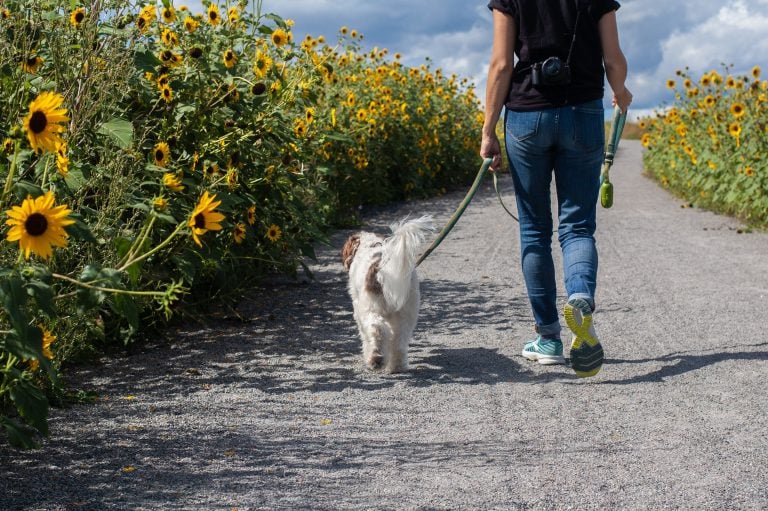
One of the best perks of living with a dog is the subsequent improvement on your own health. Dog owners enjoy lower rates of loneliness and depression and less stress than people who don’t have a furry member of their family! Although, those who receive the greatest benefits from living with a dog seem to be those who exercise or walk with their dog. Exercise is one of the most important factors in considering the health of humans and animals!

“Regular physical activity is one of the most important things you can do for your health. Being physically active can improve your brain health, help manage weight, reduce the risk of disease, strengthen bones and muscles, and improve your ability to do everyday activities.” (1)

This quote from the Centers for Disease Control and Prevention applies directly to the benefits of exercise on the human body. However, these benefits of physical activity can also apply to your dog as well. People who exercise with their dogs regularly tend to experience many physical benefits including the following:

  • Reduced risk of diabetes
  • Lower blood pressure
  • Improved autonomic tone
  • Improved stress tolerance
  • Improved cognition 
  • Improved mobility later in life
  • Increased life span

Why is walking or exercising with your dog so beneficial? Because we are more likely to stick to our fitness plan when we involve our dogs! Our dogs depend on us to meet their need for exercise – and many dogs misbehave when they don’t get enough! With the encouragement of prioritizing your dog’s health, many individuals with dogs end up exercising more. This results in fitness benefits for you and your furry friend!

Dogs who don’t get enough exercise tend to show external effects of misbehaving. However, exercise is crucial to the internal and physical health of your dog. Without exercise, they are at risk of physical and behavioral problems, such as the following:

  • Reduced muscle tone
  • Weight gain
  • Increased risk of bone and joint disorders
  • Increased risk of injury
  • Increased risk of emotional problems
  • Increased risk of behavioral problems

Starting a fitness adventure with your dog might feel daunting, time-consuming, or boring. But the dog training community can help you get started. The American Kennel Club (AKC) has introduced their Family Dog suite of activities and evaluations to help people become more active with their pets. The Family Dog program starts with simple behaviors most dogs can learn in a few weeks. The program offers gradual progression of several different activities, such as basic obedience, trick training, and fitness classes.

In January 2023, AKC launched FIT Dog titles so you can track your dog’s fitness progress and earn recognition as you go. Each level – Bronze, Silver, or Gold – helps you find ways to be active with your dog. Options include taking a FIT Dog class from an AKC-approved FIT Dog instructor, individual walks, group walk or runs, and a variety of other activities like swimming, disc and parkour! 

Now that sounds like a fitness plan we can stick to! 

To learn more about AKC FIT Dog programs and book an appointment with Anneliese, go to petworks.com/hire/pet-trainers

(1) Centers for Disease Control and Prevention. (2022, June 16). Benefits of physical activity. Centers for Disease Control and Prevention. Retrieved February 2, 2023, from https://www.cdc.gov/physicalactivity/basics/pa-health/index.htm 

About the Author

Anneliese Staff, CPDT-KA
AKC FIT Dog Instructor

Anneliese helps people and their dog find joy through training. She helps pets feel good – so they can behave better too.

Are you ready to make your dog happy and well-behaved?

Click here to book an appointment with Anneliese 

Cold Weather and Your Dog’s Skin

by Steve Ross, National Director of Training, First Aid & CPR LLC

Winter weather can be harsh on your dog’s skin, especially if he or she is an older dog. As dogs age, their oil-secreting glands slow down, making them prone to dry skin. The cold winter air and dry indoor heat only aggravate the condition, causing itching and flaking that may lead to constant scratching, biting, or licking.

To help your pet survive the winter with a healthy skin and coat, follow these suggestions:

Use a room humidifier.
The air in most houses becomes dry during the colder months, which depletes moisture from your dog’s skin and fur. A humidifier adds needed moisture to the air.

Keep baths to a minimum.
Bathing removes essential oils from the skin and can increase the chance of developing flaky skin. When you bathe your dog, use a moisturizing shampoo from the pet store. Human soaps and shampoos are formulated for human skin pH and may cause dry, irritated, itchy skin. Dry them with thick towels before taking them outdoors. A blow drier on an older dog can be harsh on dry skin. Consult with your vet about the recommended number of baths per month for your dog.

Brush your dog regularly.
Brushing improves skin, coat and circulation. Plus, clean fur lofts and holds warmth in much the same way that layering clothes does.

Never shave your dog down to the skin.
It’s fine to give your dog a trim, but for added warmth, be sure to leave his coat a little longer in the winter.

Give your dog fatty-acid supplements.
Older dogs may no longer produce enough of the fatty acids needed to keep their skin and coat healthy. Start the supplements several weeks before cold weather sets in to provide the cells of the skin with necessary
nutrients.

Increase his food if he’s very active.
If your dog engages in a lot of outdoor activities, you may need to feed him more of his regular food to provide added energy and keep his coat thick and healthy.

Buy him a coat.
Older dogs need extra protection from winter weather. Unless your dog has his own thick fur, put a warm sweater or coat and booties on your dog when he goes out on very cold days.

Dry winter skin is a problem for many dogs but it doesn’t have to be. With a little help from you, your pooch can have a healthy coat and a scratch-free winter.


About the Author

Steve RossFirst Aid & CPR, LLC was started in 2011 by Steve Ross. With his background in emergency services since 1977, Steve found the need to start training more people in lifesaving skills. As a longtime instructor for private companies and hospitals, Steve realized that the main issue of people taking these classes were the nervousness of coming to a strange, cold classroom. He felt that to alleviate this problem he needs to bring the training to the student. First Aid & CPR, LLC brings ALL necessary equipment to the student. Whether it is at their home, business or organization. Starting with CPR/AED and First Aid training, the company has evolved to offer training in Advanced Bleeding Control, Bloodborne Pathogens, Babysitting classes, Pet First Aid & Pet CPR and much more.

When It’s Time To Say Goodbye To A Sick Cat

by Michelle Quinn-Davidson, Owner of For the Love of Jobe – Pet Services, LLC

As a professional pet sitter and long-time pet parent, I am often asked by clients when is the “best” time to say goodbye to a sick cat. The answer is not simple. During this end-of-life phase, pet parents must rely on their knowledge of their pet, the advice of their vet, and recommendations of the pet sitter. And even with input, we will struggle to know when it is “time.” As I write this article today, I am facing the immense decision to say goodbye to my 18-year-old beloved fur baby cat, Eowyn.

What are the signs to look for in sick cats? A cat exhibits behaviors that will let you know that the time is near; this is how they communicate with you. Some of the signs include:

1. Lack in interest of eating and drinking.
It is common when a cat is nearing the end of their lives to lose their
appetites.

2. Extreme Weakness.
You may notice your cat is more lethargic and sedentary, weakness in their hind legs, and sleeping more than usual.

3. Lower Body Temperature.
A healthy cat’s temperature is between 37-38 degrees Celsius. As the heart weakens, other body organs start to shut down, and the body temperature drops below 37. Use an ear or a digital rectal thermometer to check their temperature. You can also feel their paws, and if they’re cool to the touch, it could be a sign of their heart slowing down.

4. Changes in Appearance and Smell.
Since cats are meticulous groomers, a lack of energy leaves a messy and
greasy appearance. Cats may also develop a detectable unpleasant odor due to toxins building up as their organs stop properly working.

5. Seeking Solitude.
Cats will withdraw and prefer solitude when they are gravely ill. In the wild, a dying cat instinctively understands that they are more vulnerable to predators and will hide to protect themselves. Domestic cats will greet you less, want to be touched less often, and will sleep in areas that are often away from their families.

What to do when you see these signs? As pet parents, we want to ensure our cat is as comfortable as possible at the end of their life. Some tips include:

● Providing them with a soft, warm, cozy bed.

● Keeping their bedding clean, especially since they may experience incontinence.

● Carrying them to the litter box if they are too weak to get up.

● Give them special food and treats they have always loved.

● Consulting your vet for proper end-of-life care.

● Giving them additional love and affection to show that you are with them until you finally say goodbye.

● Be present at the end of life. A cat will know you are with them and will love you for it.

“Euthanasia” is a Greek term meaning “good death.” As a pet parent, facing the decision to say goodbye to my Eowyn is gut-wrenching. But I know she will be with me always, and it is my responsibility to give her the care and love until her very last breath.


About the Author

Michelle Quinn-DavidsonMichelle Quinn-Davidson, MPA, CDT, CPPS,  has resided in Brookline, MA for more than 20 years. She is a Certified Dog Trainer with Pet CPR First Aid training from the Animal Behavior College and a Certified Professional Pet Sitter through Pet Sitters International. She has a certificate in COVID-19 safety protocols from Pet Sitters International and is currently working on a Fear-Free Pet Sitter certificate.​ She established JOBE in 2014 in memory of her beloved, rescued, blind Newfoundland / Labrador mix ​Jobe. Prior to starting her business, she spent more than 20 years managing various youth development nonprofit organizations. She received her master of public administration in management from New York University’s Robert F. Wagner ​​Graduate School of Public Service and ​her bachelor’s in speech from Emerson College.

Harness the Benefits of a Harness

benefits of a harness

by Beatrix Beri, CPDT-KA, UW-AAB

If you ever had to come into close contact with a long aisle of various harnesses at a pet store, you likely experienced the overwhelming feeling that often pairs with purchasing a dog harness. (more…)

How to Find the Perfect Pet Sitter

by Kathryn Cockrell, Owner of Happy Hound Pet Sitting

It’s a high stakes situation — you’re leaving your pets and home in the care of a complete stranger. Don’t get me wrong, in-home pet sitters are incredible — but it’s essential that you do your homework before handing over the keys to the castle. Here are a few important considerations when hiring a new pet sitter.

(more…)