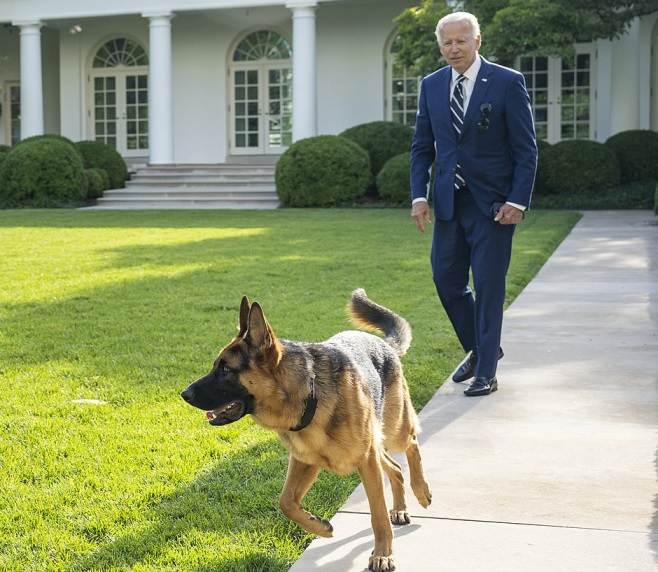
The Canine Grip of Commander Creates Demand in the Hiring of Certified Dog Trainers
In late 2021, as a birthday gift to President Biden, The White House welcomed a new furry resident, who is named…
(more…)
Dog training advice. When hiring a dog trainer, it’s important to consider several key factors to ensure a successful experience for both you and your dog. First, look for a trainer with proper credentials and experience, ideally certified by a recognized organization like the Association of Professional Dog Trainers (APDT) or the International Association of Canine Professionals (IACP). Their training philosophy is also important. Positive reinforcement techniques are widely recommended as they encourage good behavior through rewards rather than punishment.
Consider the trainer’s experience with your dog’s specific breed or behavioral issues. Communication is vital, so choose someone who is patient, listens to your concerns, and explains training techniques clearly. It’s also helpful to observe a session or ask for references to gauge the trainer’s effectiveness and approach. Remember that training is a partnership; the trainer should involve you in the process, teaching you how to reinforce good behavior at home. Ensure that the dog training environment is safe and conducive to learning, whether it’s in a group setting or private sessions. By thoroughly evaluating these aspects, you can hire a dog trainer who will help your pet develop good habits, improve behavior, and strengthen your bond.
In late 2021, as a birthday gift to President Biden, The White House welcomed a new furry resident, who is named…
(more…)
By Shannon Cutts, Animal Love Languages
From Europe to Asia to North America, all over the world pet parents share one universal problem in common. NOISE. Fireworks. Thunderstorms. Cars backfiring. Ambulances. Alarm systems. Loud music. Dogs, cats, parrots, horses, and even reptiles go into fight–or–flight mode with all the bells and whistles – barking, hissing, cowering, lunging, eliminating anywhere and everywhere. Unfortunately, with many pets, even repeated noise exposure often doesn’t eradicate these core fear symptoms. If you are left desperately wondering if there is anything else you could try, the answer is yes! Animal communicator Shannon Cutts tackles the true elephant in the room and gives you immediate practical tips you can use to keep your animals safe and calm when the volume spikes.
Guess what instigates more missing pet cases every year than anything else?
If you guessed “fireworks” give yourself a gold star and give your pet whatever treat you always give them to try to keep them safe and calm during the inevitable noise event yet to come.
The pet remedies for noise are well–known: CBD, valerian, melatonin, prescription anti–anxiety meds to calm their nerves. Physical counteractions such as daytime vigorous play to zonk them out or playing competing loud noises to drown out the snap, crackle, zap and pop. You can find everything from equine stress vests to noise–canceling pup–phones (headphones for dogs, yup!) out there in the great anti–noise pet parent marketplace.
There is just one tiny problem. At their very best, these options still function only at the level of band–aids – masking or reducing the most obvious surface symptoms of a deeper core problem no drug or distraction can touch.
1. What’s Better than Just a Band-Aid?
As an animal intuitive and sensitive – an animal communicator – , my perspective on the best approach to keeping noise–averse pets calm comes straight from the animals themselves. Here is what my pet clients are telling me they need when noise levels rise.
They need YOU to calm down.
Here, I should probably back up and explain a little more about how your pet spends all day, every day of their life, with you.
While you are busy checking items off your to–do list, working, studying, cleaning, Zooming, napping, or doing whatever you do, your dog, cat, bird, horse or other pet species is watching what I call YouTV. By this, I mean they are watching the mental pictures in your head, the emotions attached to those mental pictures, and the thoughts that are generated by each image–emotion combination.
This is not unlike how we check in with our favorite weather or traffic app to help us plan and prepare for our day. Only your pet is watching YouTV 24/7. They are always monitoring your broadcasts and will react very quickly when your channel indicates there may be cause for alarm or action.
You may even already have some proof of this. Has your dog ever started barking when you’ve been in the middle of a stressful phone conversation? Does your cat hide when the neighbor you don’t really like rings your doorbell? Is your parrot prone to screaming when you are unconsciously ruminating about a snarky comment you overheard your boss make about you to a co–worker? Our animals know. They are frequently more tuned into our mental pictures, emotions and thoughts than we are, AND they are quicker to react to them.
2. Why is YouTV Important?
With this information now in hand, let’s pretend it is the morning of July 4th. You are looking forward to the evening’s festivities, which includes the usual colorful fireworks show. You are also hyper–aware that you need to make some plans for your noise–averse pets so they don’t completely lose it when the show begins.
As you consider what to do first and next, your mind starts forming mental pictures. If you are like most pet parents, these mental pictures revolve around past moments that proved your pets hate noise. Maybe you start mentally replaying that night your dog chewed up the crown molding and your cat peed on the carpet. Perhaps you suddenly have several such memories all queued up in a line to mentally review and replay. The emotions you feel as each mental “movie clip” flashes across your mind–screen aren’t soothing either. Fear. Frustration. Irritation. Anger. Impatience. Terror. Then your thoughts start spouting out warning messages even as your left brain cranks out one idea and then another for how to keep Marlin from tearing up the couch cushions and prevent Sophie from vomiting on your sheets.
Meanwhile, your pets are watching YouTV. They are glued to it – YouTV is their favorite channel and the drama is really ramping up this morning. They are watching your mental movies of them in distress, reacting in fearful and anxious ways with behaviors that indicate they are terrorized by something that is about to happen in the very near future. They are feeling and absorbing your own heightened emotions of fear, stress, anxiety.
With all of this buildup, is it any wonder even the strongest anti–anxiety pet meds or supplements or the most vigorous round of pre–fireworks “fetch” are rarely completely effective for calming your pet?
What is truly needed here is a shift in your own mind and heart. When you consciously choose to change your YouTV channel to a station that is playing a calm, peaceful film, this will result in your animals being relaxed – no matter what the weather is like or what festivities may be going on. By changing the channel, your pets will benefit right to their core.
3. How to Change the Channels…
loud events.
What I am saying is that ultimately, your pets are looking to you for direction about how to respond to any noise event. If you are unwittingly broadcasting gloom and doom, threat and stress, fear and terror, you can absolutely expect your pets to exist in a perpetual state of fight or flight with all the expected symptoms of distress. Especially until your own mental pictures, emotions and thoughts shift in a more peaceful direction.
So here is what I would like to propose for this year’s noisy holidays as well as for any upcoming noise events in your family’s life. Still do all the usual things you do that you have seen some positive results from. Definitely ask your pet’s veterinarian for help if your pet has any kind of extreme noise phobia or reaction. Be sure your animal is microchipped and your contact information is updated in the database.
However, also play with changing your YouTV programming on the night of fireworks. Broadcasting quiet, calm mental pictures of happy pets playing or snuggling or snoozing, paired with happy and loving emotions and proud thoughts of how well they are doing, is going to shift the energy of the whole day in such a beneficial direction for your animals.
If you are not used to working with your own mind and emotions in this way, it can help to start practicing right away. Let’s say your mind keeps replaying a particularly traumatic memory of when your noise–averse pup injured himself trying to get out of his kennel during last year’s fireworks. So take that YouTV clip and shift it. Instead, envision your dog napping calmly and cozily in his kennel all through the fireworks show.
Or maybe you keep visualizing your bird screaming and repetitively feather–plucking during a recent wild thunderstorm. Shift that YouTV clip into a scene where your parrot tucks into a tasty dinner and doesn’t seem to even notice the thunder and lightning going on while she eats.
You get the general idea. You can do the same thing with repetitive thoughts that are keeping you anxious and worried about how your pet is going to react to some near–future noise event. Let’s say your mind keeps saying to you, “Tucker is just so sensitive to noise and I sure hope he doesn’t develop new hot spots again from all the stress”. Take that repetitive thought and shift it to “Tucker is so brave and mature and he has everything he needs to stay calm and healthy even when it gets noisy outside.” Make sense?
Shannon Cutts is an intuitive animal communicator and Reiki masterClick here to book a consultation with Shannon
By Anneliese Staff, CPDT-KA
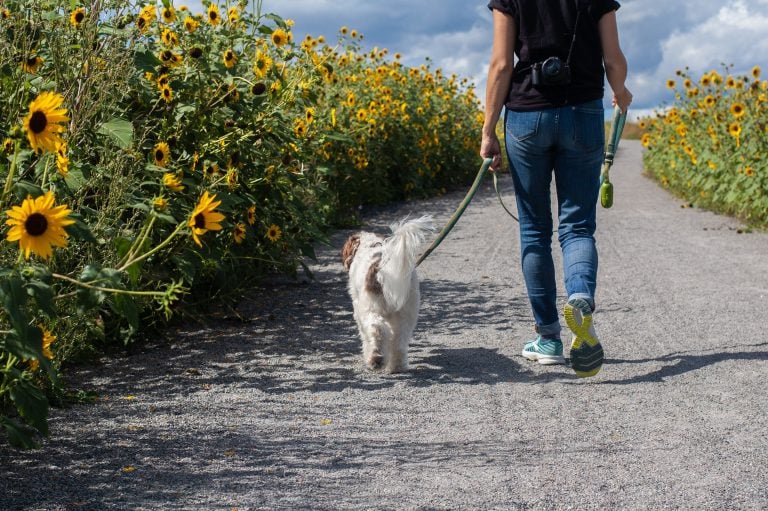
One of the best perks of living with a dog is the subsequent improvement on your own health. Dog owners enjoy lower rates of loneliness and depression and less stress than people who don’t have a furry member of their family! Although, those who receive the greatest benefits from living with a dog seem to be those who exercise or walk with their dog. Exercise is one of the most important factors in considering the health of humans and animals!
“Regular physical activity is one of the most important things you can do for your health. Being physically active can improve your brain health, help manage weight, reduce the risk of disease, strengthen bones and muscles, and improve your ability to do everyday activities.” (1)
This quote from the Centers for Disease Control and Prevention applies directly to the benefits of exercise on the human body. However, these benefits of physical activity can also apply to your dog as well. People who exercise with their dogs regularly tend to experience many physical benefits including the following:
Why is walking or exercising with your dog so beneficial? Because we are more likely to stick to our fitness plan when we involve our dogs! Our dogs depend on us to meet their need for exercise – and many dogs misbehave when they don’t get enough! With the encouragement of prioritizing your dog’s health, many individuals with dogs end up exercising more. This results in fitness benefits for you and your furry friend!
Dogs who don’t get enough exercise tend to show external effects of misbehaving. However, exercise is crucial to the internal and physical health of your dog. Without exercise, they are at risk of physical and behavioral problems, such as the following:
Starting a fitness adventure with your dog might feel daunting, time-consuming, or boring. But the dog training community can help you get started. The American Kennel Club (AKC) has introduced their Family Dog suite of activities and evaluations to help people become more active with their pets. The Family Dog program starts with simple behaviors most dogs can learn in a few weeks. The program offers gradual progression of several different activities, such as basic obedience, trick training, and fitness classes.
In January 2023, AKC launched FIT Dog titles so you can track your dog’s fitness progress and earn recognition as you go. Each level – Bronze, Silver, or Gold – helps you find ways to be active with your dog. Options include taking a FIT Dog class from an AKC-approved FIT Dog instructor, individual walks, group walk or runs, and a variety of other activities like swimming, disc and parkour!
Now that sounds like a fitness plan we can stick to!
To learn more about AKC FIT Dog programs and book an appointment with Anneliese, go to petworks.com/hire/pet-trainers

Anneliese Staff, CPDT-KA
AKC FIT Dog Instructor
Anneliese helps people and their dog find joy through training. She helps pets feel good – so they can behave better too.
Are you ready to make your dog happy and well-behaved?
by Dr. Jeni Goedken, Hospice Veterinarian and owner of Fond Farewell.
Pets with special needs hold a cherished place in our hearts. These dogs and cats face daily challenges with an inspiring amount of determination and resilience. Whether your pet’s mobility or sensory loss was sudden or progressed over time, when you provide them physical and emotional support, you can ensure they enjoy a rich and fulfilling life—without limits. Help your specially-abled pet live their best life with these tips. (more…)
by Frankie Jackson, CCPDT Certified Professional Dog Trainer & owner of Canine Counseling
Imagine the scene. It’s a beautiful day, you’re strolling through the park and spot a sweet little Goldendoodle racing around. Suddenly she spots another dog, this one is on-leash, and races towards them to say hello. “It’s ok, she’s friendly!”, the owner of the Doodle yells, laughing as their errant pup ignores their attempts to call them back. To many dog owners this may sound far from worrisome but for those among us with reactive dogs the same scenario could be a potential nightmare. (more…)