by Kristin Clark, Founder and Editor-in-Chief of Raw Pet Digest
According to the website petinsurance.com, hot spots are one of the most common reasons that people take their dogs to the vet. In fact, hot spots rank fourth in the top 10 reasons to take dogs to the vet! And it’s no wonder—hot spots (or acute moist dermatitis) are irritated, infected, hot, red, moist lesions that are both painful and itchy to your dog. They often grow rapidly, and in many dogs are chronic and cause a lot of discomfort to the dog and stress (and money, in terms of vet bills and treatments) to the owner.
According to conventional wisdom, hot spots can occur whenever something irritates a dog’s skin and leads to scratching or biting of the irritated area. Most people believe that hot spots are the result of allergies, insect bites, lack of grooming, ear or skin infections, or excessive licking and chewing. However, as in so many things, this does not truly get at the heart of what causes hot spots, and certainly doesn’t lend to being able to address them effectively (hence why, in so many instances, they become a seemingly chronic condition).
Conventional approaches to “treating” hot spots
For the majority of people, if their dog starts to lick or chew excessively, or if there is any indication of a hot spot, they take the dog to the vet. Common conventional approaches to dealing with the hot spot usually include shaving the area around the hot spot, prescribing antibiotics and painkillers, applying or administering medication to kill fleas, ticks, and other parasites, adding a dietary supplement to increase essential fatty acids, prescribing corticosteroids or antihistamines to relive itching, and recommending a hypoallergenic food (which is still processed kibble) to address any potential food allergies. Often, people are also advised to get their dog groomed regularly and get them shaved, especially in the summer, and they are also told to maintain a regular flea and tick prevention program using over-the-counter flea and tick preventives. They are also advised to make sure that their dog gets plenty of exercise and isn’t subjected to lots of stress.
I take my dog to the vet…but the hot spots keep coming back!
What most people find—because the hot spots keep coming back—is that these measures fall short in actually dealing with the issue. That’s because conventional treatments don’t get at the root cause of the hot spots—at best, they suppress the symptoms, and at worst, they exacerbate the problem—and so the hot spots keep reappearing, often even worse than before.

To understand why this is, let’s first take a look at the root cause of hot spots. Because when you think about it logically, saying that hot spots are caused by itching or scratching, or exposure to rain or swimming, or the dog not being clipped in the summer, doesn’t make sense. Dogs itch and scratch, and if they are doing so excessively, it means that something is out of balance, and that imbalance is directly related to the hot spot eruption—it’s not the itching and scratching that caused the hot spot, it’s the imbalance. Similarly, the belief that dogs that are exposed to rain or water will develop hot spots doesn’t make sense. Many dogs spend a great deal of time in the water and never have a problem. Many dogs that don’t spend time in the water do have problems. While getting wet may seem to trigger an eruption, a healthy, balanced dog should be able to swim and get wet without any issues. Dogs in moist environments may be more prone to hot spot eruptions, but again, because not every dog in a moist environment suffers from hot spots, that is not the true root cause of the eruption. While we’re looking at some of the common methods of “preventing” hot spots, let’s take a look at the idea that you should shave your dog every summer to help keep hot spots from erupting. Keeping a dog’s fur shaved in the summer actually removes their protection from the sun and UV rays and eliminates the insulation that their fur provides. Remember, dogs don’t cool themselves by sweating like we do; they pant. In fact, dogs can only release sweat through their foot pads, through what are called merocrine glands. While they do have sweat glands (called apocrine glands) all over their body (found with the hair follicles), these glands do not release sweat, they release pheromones, which aid them in communicating with other dogs.
Understanding the root cause of hot spots
So what is actually going on when a dog presents with hot spots? In essence, when you see hot spots erupting on your dog, it means that the dog’s body is being overwhelmed by toxins that are coming in at a faster rate than the liver and kidneys can handle. The skin is the largest eliminative organ, and so the toxins start to “erupt” out of the skin, as part of the body’s frantic effort to rid itself of them. And when you add antibiotics and steroids and flea/tick preventives on top of it, the toxic overload increases while at the same time the body’s ability to stay balanced and handle the toxins, decreases.
Like us, our dogs are designed to detox every single moment of every day. Interestingly, as I was reading the book The Reboot with Joe Juice Diet, I realized that he conveyed this perfectly. Yes, he was talking about people, but the same holds true for our dogs: “[Your dog’s] liver, kidneys, bowels, lymphatic system, and skin all aid in the elimination of toxins and waste”[1]. Furthermore, just like with us, their systems can get “clogged, inflamed, rusty, and slow because we put too much pressure on them and don’t give them the pure fuel they need. What that means is that [their] natural detoxification processes have a much harder time of it because of [their] lifestyle. Chemicals […] in the environment—herbicides, pesticides, fungicides, petrochemicals, paints, cleaning products—all contribute to taxing [their] natural detox systems, not to mention all the prescription drugs [they are given][2].
I frequently discuss antibiotics and steroids, and their overall impact on our pets, when I’m doing consultations with pet parents who want to help their pets thrive. When I’m discussing them with people, they are often shocked at the profound ramifications of giving their pets antibiotics and steroids. Both antibiotics and steroids throw the body into a state of imbalance. Antibiotics wipe out all the bacteria and gut flora, which severely inhibits the ability of the immune system to do its job, while at the same time leading to future problems because the “bad” bacteria tend to grow back more quickly than the “good” bacteria, leading to further imbalance, which often presents as ear infections, yeast infections, and other issues (which, not surprisingly, do lead to dogs itching and scratching excessively…and that excessive, out-of-balance scratching and itching can cause a flare-up of hot spots in a dog with an excess of toxins. And so the roller coaster continues…). And steroids actually suppress the immune system, so the dog’s body has less capability to stay healthy, ward off pathogens and viruses, and keep the dog in tip-top shape. Administering these when the system is already completely out-of-whack just makes it worse.
Furthermore, applying products topically or administering them internally to control parasites also cause a flood of toxins into the dog’s body. These products contain poison intended to kill the parasites. But what that means is that your dog’s body is exposed to poison—often directly on the skin—at the very same time that the skin is trying to shed out toxins! It’s a lose-lose situation for your dog’s immune system, and therefore, a lose-lose situation for your dog.
So what can I do?
So, if the conventional treatments don’t help—and any of you with pets that suffer from hot spots know exactly how difficult and frustrating this can be—what can be done? It’s actually relatively simple, although not necessarily easy or quick, especially if you’ve been following conventional treatments for a long time and your dog has therefore been flooded with toxins. The first step is to make sure that your dog is on a diet appropriate to their species—what we call a species-appropriate raw food, or SARF, diet. This diet is the best thing you can feed your dog, because it ensures that they receive, in a natural, wholesome, raw form, all the food and nutrients they need, in the correct proportions and ratios they need, while eliminating all the stuff that they don’t need. It supports their entire bodies, including their immune systems, digestive systems, organs, and body processes.

Diet
When you feed a species-appropriate raw food diet, you will be lessening the work that the liver and kidneys have to do, because they won’t have to remove waste at a rate that exceeds what they are designed for. You will reduce the workload of the pancreas, bring the stomach pH to an appropriate level, and flood your dog with the nutrients he or she needs to keep all the body systems in good working order.
Flea, tick, and heartworm preventives
But, to address the toxin issue, you will need to go beyond diet. Flea and tick preventives, such as Frontline and K9 Advantix, are poison, and when you apply them to your dog, the poison goes through their skin and their body must then work to eliminate that poison. Similarly, when you give your dog a heartworm pill every month, you are feeding them a product that contains poison. This may seem shocking, but it is true. As Dr. Karen Becker (who appeared in Pet Fooled) says:
“Heartworm preventives are chemical insecticides with the potential for short- and long-term side effects damaging to your pet’s health. In addition, heartworm “preventives” don’t actually prevent the worms. They poison the larvae at the microfilaria (L1 to L2) stage of development, causing them to die inside your pet’s body.”
And that’s not all: Dr. Will Falconer, a holistic vet, says in his article “How to Stop Poisoning Your Dog in the Name of Prevention“:
- The administration of common monthly heartworm preventatives has been associated with autoimmune disease and even death in dogs
- The six-month injection for preventing heartworm called Pro-Heart 6 was recalled due to toxic side effects that included fatalities in dogs? (It’s back on the market now. Oh oh.)
- The drug called Trifexis is all over the internet associated with illness and deaths in dogs taking it. Some after their first dose, some after many doses.
- The “Monthly Pill” Itself can Kill Your Dog! (emphasis mine)
He goes on to say:
Dr. Jean Dodds [world-renowned expert in hematology and immune diseases…has linked] the two common heartworm preventatives to autoimmune disease and death. Here are just a few examples from her research:
- German Shepherd, sudden death 2 days after dose
- Cocker Spaniel, sudden death; seizures and high fever
- Mini Schnauzer, ataxia, sudden death; another who got ill after 3 years of use
- Labrador mix, bone marrow failure, reactions after 2nd and 3rd dose
- Irish Setter, AIHA (autoimmune hemolytic anemia) and death, after first dose
And on the list goes. Many of the cases she reports had no pre-existing illness, and got ill after the first dose to several doses later. Several had recurring sickness in the same week of each month, the very week they got their heartworm preventatives.
As you can see, when you give your dog preventives, you are loading his or her system with toxins, and they must work extra hard to rid themselves of the toxins in the preventives. So, another vital step in helping your dog come back to optimal balance, and to reduce the load on the immune system, is to stop flooding your dog’s body, internally and externally, with poisons. Similarly, the adjuvants in vaccines—aluminum and mercury are just a few—enter your dog’s body directly into their bloodstream when you vaccinate them. This is more toxins that the body must frantically work to eject, and if the kidneys and liver are already overloaded because of inappropriate food, parasite preventives, and so on, the skin may have to help remove the toxins, and hot spots may result.
Herbicides, pesticides, and cleaning products
In addition to the things you are putting directly and deliberately into or on your dog, you also have to consider the effects of things like herbicides and pesticides, as well as toxic cleaning products. Our dogs run around outside on the grass and in our yards with no protection between their feet and the ground. They brush up against foliage and sniff everything. This means that they are exposed to everything that you put in your yard, including chemical fertilizers, weed killers, and other herbicides. If your yard or house is sprayed for bugs, they will come into contact with residual pesticides. And because they are closer to the ground and in direct contact with the floors of the house (if you let them inside), they are also exposed to whatever is in what you use to clean your house and floors.
So, take a good look at what you are putting down in your house and yard. If you want to use better cleaners, there are lots of recipes for non-toxic cleaners of every sort on the internet. You can also go to the Environmental Working Group’s (EWG) website at www.ewg.org, and take a look at their ratings for various cleaning products (go to http://www.ewg.org/guides/cleaners/content/top_products). The goal is to reduce or remove toxins in the environment as much as possible, so your dog’s kidneys and liver don’t have to deal with them and get overwhelmed.
Natural modalities
You may also want to support your dog with natural modalities when they are going through a hot spot episode. Various essential oils, such as lavender, feel soothing to the skin, and are really good at helping the body and especially the skin to rebalance (and remember, the hot spots are caused by an imbalance, which the skin is trying to assist in relieving). Additionally, colloidal silver may help support your dog’s immune system while providing antibacterial, antiseptic, and anti-inflammatory benefits in a safe and natural way.
The healing response
Keep in mind that it may take some time for the body to flush out all the toxins, and you may see the hot spots get worse as the body goes through a healing response. It’s important to remember the 8th law of health—trust—during this process, and to have patience as the body seeks to heal itself. It took a long time for the imbalance to get to the point where hot spots are seen, and it will take time for everything to rebalance. If you go back to conventional treatments, which suppress the issue without really address the root cause, you may make it more difficult for the body to come back into balance, and you will probably have to start over, with an even more intense case. It can be very difficult, but the natural modalities may provide some relief. If your dog is experiencing hot spots and you want to make sure you are supporting them in every way that you can, you may want to set up a consultation with a certified small animal naturopath (you can find a certified practitioner on the American Council of Animal Naturopathy’s website).
Hot spots can be one of the most frustrating and distressing issues you have to deal with as a dog owner. However, as with most things, when you really get into the root cause of the issue, you will find that you can help support your dog so they can overcome their chronic hot spots in a natural way. By removing toxins and helping to rebalance and strengthen their immune system, you will enable their organs and body systems to function in a normal, natural way, and their bodies will begin to flush out toxins in an effective and normal way. Because there will be significant less toxins going in, their skin will not have to “erupt” in an effort to rid the body of excess toxic material. Your dog will return to a state of balance by healing and rebalance him or herself, just as nature intended.
[1] Cross, Joe. The Reboot with Joe Juice Diet. 2014 Greenleaf Book Group Press, pp 15
[2] Cross, Joe. The Reboot with Joe Juice Diet. 2014 Greenleaf Book Group Press, pp 15-16





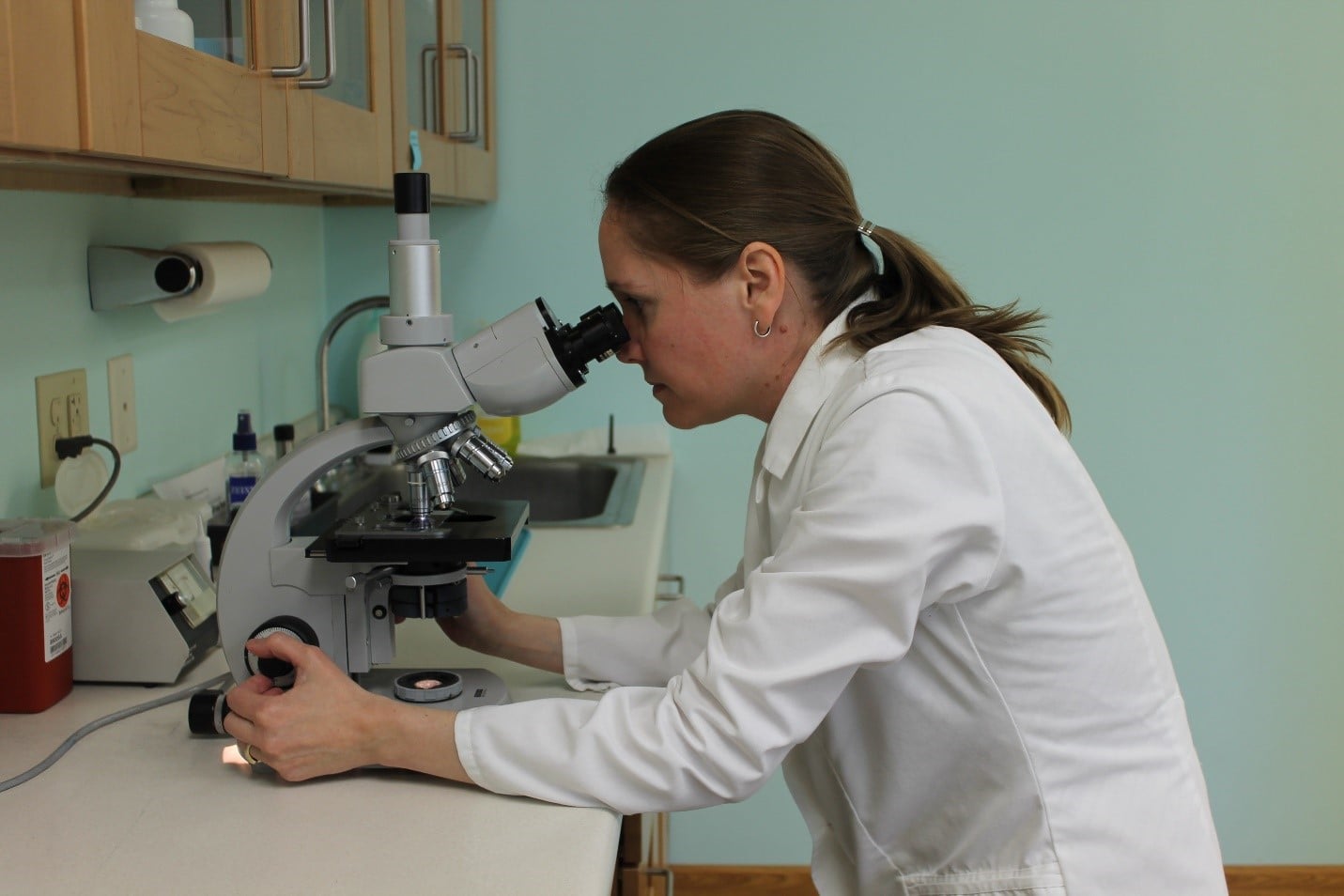
 Dr. Melissa Eisenschenk is a board-certified veterinary dermatologist. She completed her Bachelor of Science with minors in Animal Science and Chemistry at the University of Wisconsin- River Falls and attended veterinary school at the University of Minnesota. After vet school, she was in private practice for 4 years in Rochester and Minneapolis, and then returned in 2006 to the University of Minnesota for a dermatology residency (3 year program) and Master’s degree. She passed dermatology board exams in 2009. Dr. Eisenschenk worked out of the Oakdale Animal Emergency and Referral Center as a Veterinary Dermatologist for 3.5 years before starting Pet Dermatology Clinic. She has a bunch of city chickens, a husband, and 2 daughters, Mae and Bea.
 petworks tm