Dog training advice. When hiring a dog trainer, it’s important to consider several key factors to ensure a successful experience for both you and your dog. First, look for a trainer with proper credentials and experience, ideally certified by a recognized organization like the Association of Professional Dog Trainers (APDT) or the International Association of Canine Professionals (IACP). Their training philosophy is also important. Positive reinforcement techniques are widely recommended as they encourage good behavior through rewards rather than punishment.
Consider the trainer’s experience with your dog’s specific breed or behavioral issues. Communication is vital, so choose someone who is patient, listens to your concerns, and explains training techniques clearly. It’s also helpful to observe a session or ask for references to gauge the trainer’s effectiveness and approach. Remember that training is a partnership; the trainer should involve you in the process, teaching you how to reinforce good behavior at home. Ensure that the dog training environment is safe and conducive to learning, whether it’s in a group setting or private sessions. By thoroughly evaluating these aspects, you can hire a dog trainer who will help your pet develop good habits, improve behavior, and strengthen your bond.
by Kara Hollars, owner of Personal Family Dog Trainer
The Problem You see a person working with their dog, using treats as a reward. The person shows the dog a treat, then asks them for a behavior. The dog complies 100% of the time, which looks very impressive! This goes on for some time. Suddenly, a look of panic crosses the persons face. They’ve run out of treats! They ask their dog for another behavior, the dog looks for the treat, then gets up and walks away. The owner follows, desperately trying to get the dog to listen. What went wrong? (more…)
Here’s the scenario: your pet recently began to do something really out of character. Maybe she started snapping at another household pet, or maybe he started to -gross!- eat his own poop. You know this calls for a professional’s input, but who can help? Should you bring in a pet trainer, or is this a case for a different kind of specialist known as an animal behaviorist? We’ll share the differences between the two pet pros so you can get the help you need.(more…)
There’s that old joke about “herding cats” that’s used to describe something extremely difficult, if not impossible. Cats have always been thought of as independent and aloof creatures that do what they want on their own time. This likely comes from comparing them to dogs who have entirely different behaviors and motivations. The reality is that cats can be trained to do a variety of things. It can be retraining a negative behavior to something more pleasing to their guardians (such as using the litter box) or learning to “SIT” on command. Sometimes the biggest hurdle is training the guardians to realize that training really is possible.(more…)
When it comes time to add a new furry member to the family, more people than ever are looking at shelters and rescues. Approximately 1.6 million dogs are adopted every year in the US. The image of shelter dogs as sickly, ill-behaved animals is fading away as more and more people realize that shelter animals are simply pets who are in need of a new home! And while shelter dogs can be just as healthy, friendly, and out going as those from breeders, it can be more difficult to assess what kind of temperament a dog has when they live in a shelter environment. (more…)
By Gaby Dufresne-Cyr, Owner and Founder of the Dogue Shop
What is social learning in dogs, and why bother with social cognitive learning theory (SCT)? Here is a look at a theory which is rapidly changing dog training, but more specifically, dog behavior modification. The topic is complex; therefore, allow me to break it down into a few sections. (more…)


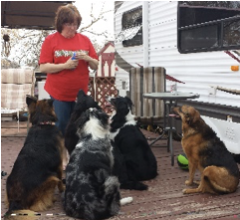 You see a person working with their dog, using treats as a reward. The person shows the dog a treat, then asks them for a behavior. The dog complies 100% of the time, which looks very impressive! This goes on for some time. Suddenly, a look of panic crosses the persons face. They’ve run out of treats! They ask their dog for another behavior, the dog looks for the treat, then gets up and walks away. The owner follows, desperately trying to get the dog to listen. What went wrong? (more…)



 petworks tm